
About the Trip
Rameswaram is one of the most sacred places in India — a temple town on an island at the very tip of Tamil Nadu, where the land runs out into the sea and legend, faith and history all meet. It is one of the four Char Dham pilgrimage sites, home to a great Jyotirlinga temple with the longest corridor of any Hindu temple in India. And just beyond it lies the haunting ghost town of Dhanushkodi and the point where, in the Ramayana, Rama is said to have built his bridge to Lanka.
It's a long way from Bangalore — around 570 km, a genuine overnight haul each way — but few weekend trips pack in this much: a temple pilgrimage, ritual sea baths, a train ride across the ocean on the iconic Pamban Bridge, and a drive to land's end at Arichal Munai. This trip runs overnight so you wake up on the island with two full days to explore.
Below is the plan we follow, what to expect at each stop, and the practical details worth knowing before you go.
Recommended Itinerary – 2 Days in Rameswaram
🌙 Night – Departure (Day Zero)
Pickups begin around 8:30 PM across Bangalore, and the bus travels overnight to the coast — it's a long drive, so settle in and sleep. Breakfast is a stop on the way, and you'll cross onto the island in the morning.
🌄 Day 1 – Temple, Theerthams & the Sea Bridge
🚂 The Train Across the Sea (Pamban)
Start with something unforgettable: the short train ride from Mandapam onto Rameswaram, crossing the sea on the Pamban Bridge. Opened in 1914, it was India's first sea bridge — over 2 km of track skimming just above the water, with the Gulf of Mannar on both sides. It's a highlight before you've even reached the temple.
🌊 Agni Theertham & the 22 Theerthams
Pilgrims traditionally bathe before darshan. Agni Theertham is the sea itself, right in front of the temple, and inside the Ramanathaswamy Temple are 22 sacred wells (theerthams) where devotees take a ritual dip — buckets of water drawn from each in turn. There are said to be 64 holy water bodies in and around Rameswaram in all.
🛕 Ramanathaswamy Temple
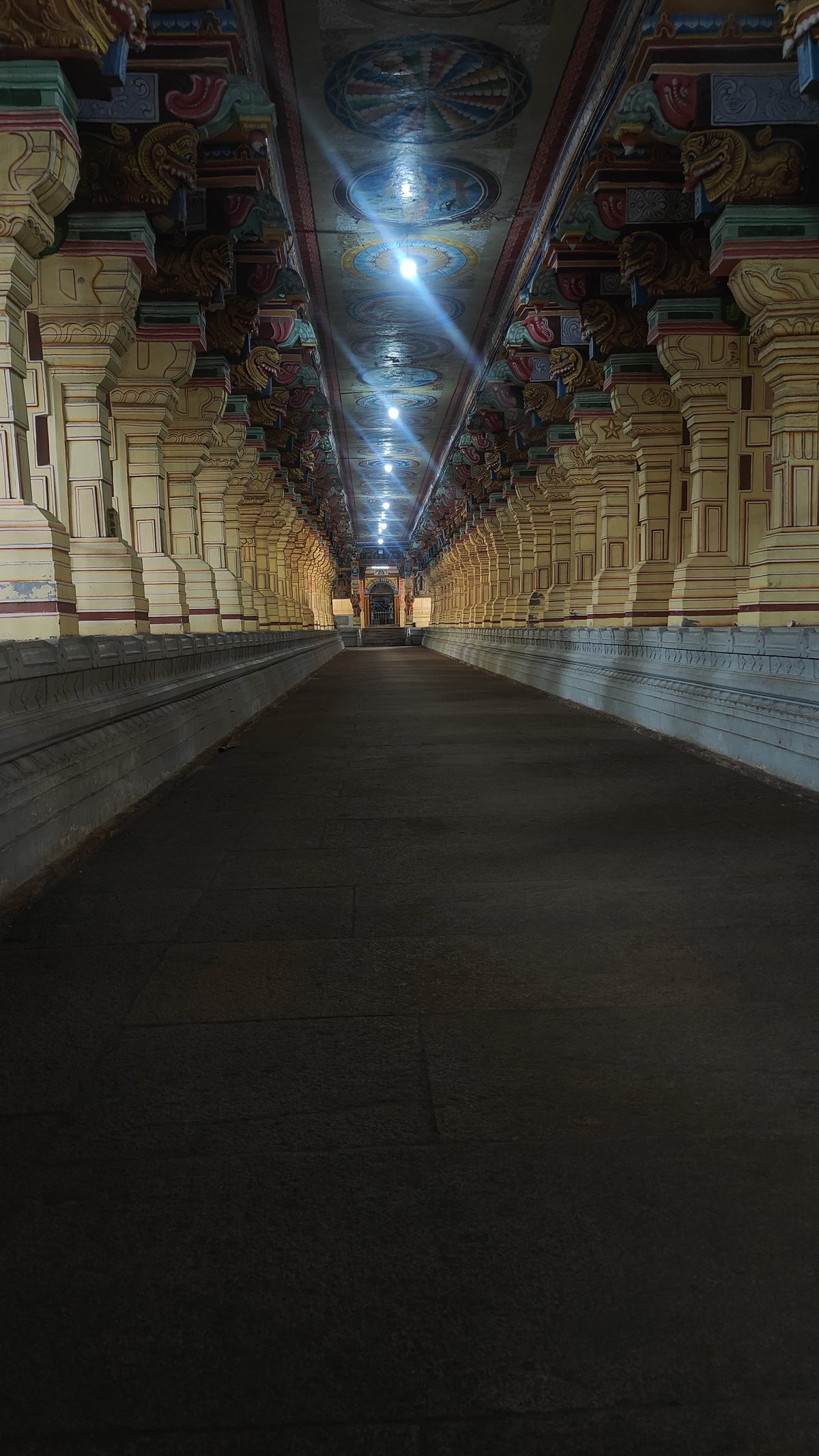
The heart of the trip. The Ramanathaswamy Temple enshrines one of the twelve Jyotirlingas of Shiva, and its third corridor is the longest of any Hindu temple in India — a seemingly endless run of carved pillars vanishing into the distance. Afterwards, there's the prasad counter, the local market, and (optionally) the Panchamukhi Hanuman temple. Dinner and an overnight stay follow — with a possible stop at the home of Dr. A.P.J. Abdul Kalam, who was born here.
🌄 Day 2 – Dhanushkodi & Land's End
🛣️ Dhanushkodi & Arichal Munai
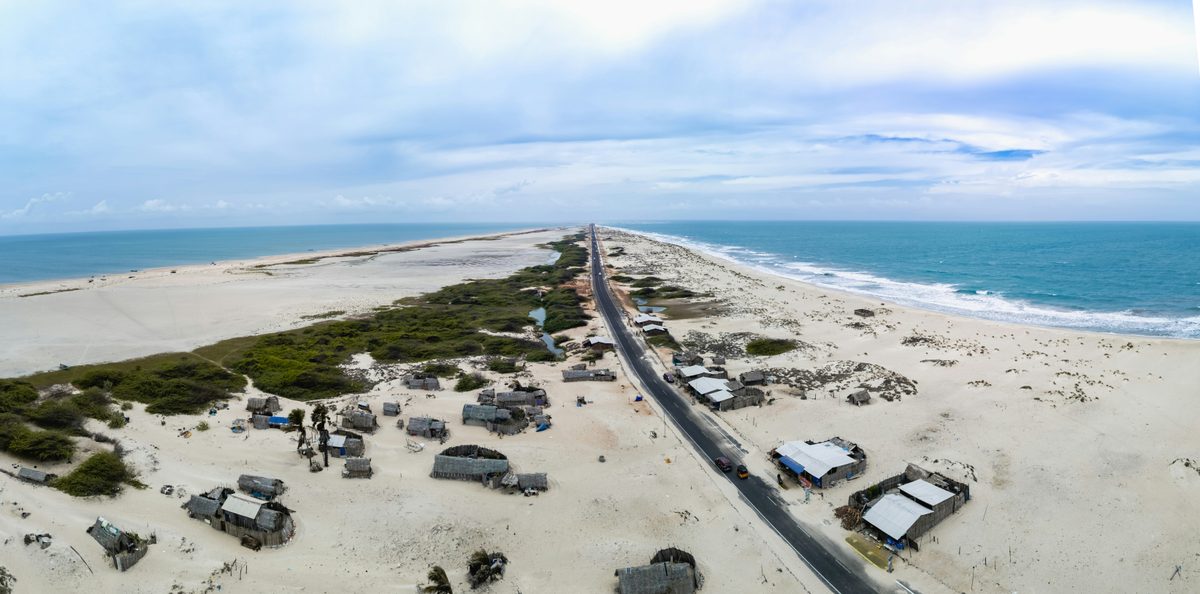
After an optional sunrise and darshan, drive out to Dhanushkodi — a thin finger of sand at the island's tip with the sea on both sides. This was a thriving town until a cyclone washed it away in 1964, leaving only ghostly ruins (the temple, they say, survived). At the very end, Arichal Munai, the land simply stops — and beyond it stretches the Ram Setu, the chain of shoals that legend says Rama built as a bridge to Lanka. There's a lighthouse and a Ram Setu viewpoint along the way.
🚀 Abdul Kalam Memorial & Pamban Viewpoint
Back towards town, visit the striking Dr. A.P.J. Abdul Kalam Memorial, honouring the "Missile Man" and former President who grew up on this island, and stop at the Pamban Bridge viewpoint for a last look at the sea crossing before the long drive home.
🌙 ~04:00 PM – Return to Bangalore
From Rameswaram the bus starts back around 4:00–5:00 PM, with dinner en route. It's a long road home, so expect to reach Bangalore in the small hours of Monday, roughly 4:00–5:00 AM. A big journey — but a Jyotirlinga, a sea bridge and land's end in two days make it a pilgrimage worth the miles.
2-Day Trip Summary
| When | Activity |
|---|---|
| Fri 8:30 PM | Depart Bangalore, overnight journey |
| Day 1 morning | Breakfast, Mandapam–Rameswaram train over the Pamban Bridge, check-in |
| Day 1 daytime | Agni Theertham, 22 theertham baths, Ramanathaswamy Temple, market |
| Day 1 evening | Abdul Kalam House (optional), dinner & overnight stay |
| Day 2 early | Optional sunrise & Mani darshan, checkout |
| Day 2 morning | Lighthouse, Dhanushkodi road, Arichal Munai, Ram Setu viewpoint, ghost town |
| Day 2 afternoon | Abdul Kalam Memorial, Pamban viewpoint, start return |
| ~04:00–05:00 AM | Reach Bangalore (Monday) |
💬 WhatsApp-Friendly Itinerary
2-Day Trip: Rameswaram from Bangalore
- 🌙 Fri 8:30 PM: depart, overnight to Rameswaram
- 🚂 Day 1: train over the Pamban sea bridge
- 🌊 Agni Theertham + 22 theertham baths
- 🛕 Ramanathaswamy Temple (Jyotirlinga)
- 🚀 Day 2: Dhanushkodi, Arichal Munai & Ram Setu
- 🏮 Lighthouse + ghost town ruins
- 🎖️ Abdul Kalam Memorial + Pamban viewpoint
- 🏁 Back in Bangalore ~4–5 AM Monday
A Jyotirlinga pilgrimage and land's end, all in one weekend.
Know Before You Go
| Detail | What to Expect |
|---|---|
| Distance from Bangalore | Around 570 km — a long ~11-hour haul, done overnight; a big travel day each way |
| Temple & theertham baths | Carry a change of clothes and a towel for the sea and 22-well baths; dress modestly for darshan |
| Photography | Cameras and phones are usually not allowed inside the Ramanathaswamy Temple's inner areas |
| Best season | October–March for the most pleasant coastal weather; summers are hot and humid |
| At Dhanushkodi | It's windy and exposed with little shade — carry water, sun protection and a cap |
| What to carry | A change of clothes, towel, sunscreen, hat, and cash for prasad, the market and entries |
FAQs
1. How far is Rameswaram from Bangalore?
Around 570 km — one of the longer pilgrimages from Bangalore, at roughly 11 hours. This trip covers it overnight both ways, so you sleep on the bus and spend your days on the island rather than on the road.
2. What is special about the Ramanathaswamy Temple?
It enshrines one of the twelve Jyotirlingas of Shiva, making it one of India's holiest temples and part of the Char Dham. It's also famous for having the longest corridor of any Hindu temple in India — an immense colonnade of carved pillars — and for its 22 sacred theertham wells where pilgrims bathe.
3. What are the theertham baths?
Pilgrims traditionally bathe before darshan — first in the sea at Agni Theertham in front of the temple, then at the 22 sacred wells inside, where temple staff draw a bucket of water from each and pour it over you in turn. Bring a change of clothes.
4. What is Dhanushkodi and the Ram Setu?
Dhanushkodi is a ghost town at the eastern tip of the island — a thriving settlement until a 1964 cyclone destroyed it, leaving only ruins. At its very end, Arichal Munai, the land runs out; from there stretches the Ram Setu (Adam's Bridge), a 29-km chain of shoals towards Sri Lanka that legend links to the Ramayana.
5. What is the Pamban Bridge?
The Pamban Bridge is the railway bridge connecting Rameswaram island to the mainland — over 2 km long and opened in 1914 as India's first sea bridge. Crossing it by train, with the sea on both sides, is one of the trip's most memorable moments.
6. Is this trip suitable for families?
Yes — it's a pilgrimage-and-sightsee itinerary with no trekking, popular with families and older travellers. The main things to plan for are the long overnight journey each way and the hot, exposed conditions at Dhanushkodi. Carry a change of clothes for the theertham baths.
Did You Know?
Fascinating facts about Rameswaram
🛕 Temple & Faith
One of Twelve Jyotirlingas
The Ramanathaswamy Temple is one of Shiva's twelve Jyotirlinga shrines and one of the four Char Dham — placing Rameswaram among the very holiest sites in India.
India's Longest Temple Corridor
The temple's pillared corridors are the longest of any Hindu temple in India — up to 21 ft wide and 25 ft high, running for what feels like forever.
Sixty-Four Sacred Waters
There are said to be 64 theerthams (holy water bodies) in and around Rameswaram, of which 22 lie within the temple itself — pilgrims bathe in each in turn.
🌊 Island & Legend
India's First Sea Bridge
The Pamban rail bridge, over 2 km long, opened in 1914 as India's first bridge over the sea — and for decades was the country's longest.
The Town the Sea Erased
Dhanushkodi was a bustling town with a railway and a port until the 1964 cyclone washed it away in a single night — today only its ruins remain, an eerie "ghost town" at land's end.
The Missile Man's Island
Dr. A.P.J. Abdul Kalam — India's "Missile Man" and its President from 2002 to 2007 — was born in Rameswaram in 1931; his house and memorial are on the island.
Travel Tips
- Carry a change of clothes and a towel. Between the sea at Agni Theertham and the 22-well baths, you'll get thoroughly wet before darshan.
- Leave the camera on the bus for the temple. Photography is restricted inside the Ramanathaswamy Temple's inner areas.
- Dress modestly. This is one of India's holiest temples — cover shoulders and knees.
- Sun-proof yourself for Dhanushkodi. It's windy, exposed and shadeless — hat, sunscreen and water are essential.
- Do the train crossing if you can. The ride over the Pamban Bridge, sea on both sides, is a genuine highlight.
- Sleep on the bus. Rameswaram is far; the overnight travel is what makes two days there possible.
- Carry cash. Prasad, the market, entries and Dhanushkodi jeeps are largely cash-based.
Ready to Travel?
Join BOZ Travel's 2-day group trip to Rameswaram. Skip the long overnight drive and the planning — travel with a fun group, stay in a comfortable hotel, and let the trip captain handle the logistics while you focus on the temple, the theerthams and land's end.
Our trips include transport, hotel accommodation, breakfasts, the train ticket and an experienced trip captain, with a well-paced itinerary that pairs the Jyotirlinga pilgrimage with Dhanushkodi and the Pamban Bridge.
References
- Rameswaram - Wikipedia - The island, the Ramanathaswamy Jyotirlinga temple and its corridor, the theerthams, Dhanushkodi and Abdul Kalam
- Pamban Bridge - Wikipedia - India's first sea bridge, connecting Rameswaram island to the mainland