
About the Trip
They call Coorg the "Scotland of India," and after a weekend in its misty, coffee-scented hills you'll understand why. This is Kodagu — a district of rolling green estates, waterfalls tumbling through the forest, a warrior culture all its own, and the source of the sacred river Kaveri.
It's one of the best weekend escapes from Bangalore, roughly 250 km southwest, and a 2-day trip is enough to taste the best of it: elephants by the river, a walk through a working coffee plantation, a Tibetan monastery that glows like gold, a misty peak reached by jeep, and a proper Coorg waterfall. This itinerary uses a Friday-night departure so you wake up in the hills with two full days ahead.
Below is the plan we follow, what to expect at each stop, and the practical details — costs, best season and tips — worth knowing before you go.
Recommended Itinerary – 2 Days in Coorg
🌙 Friday Night – Departure (Day Zero)
Pickups begin around 10:00 PM on Friday across South and East Bangalore, and the bus travels overnight so no daylight is wasted on the road. Sleep on the way; you'll reach Coorg in the early morning, freshen up at the hotel, and start the day among the hills.
🌄 Day 1 – Elephants, Coffee & the Golden Temple
🐘 Dubare Elephant Camp
The day starts on the banks of the Kaveri at Dubare Elephant Camp, a forest-department camp where you can watch the elephants being bathed and fed and learn how they're cared for. (Depending on permissions and water levels it may be swapped for the Harangi camp or Chiklihole Dam — the river-and-forest mood is the same.)
☕ Coffee Plantation Tour
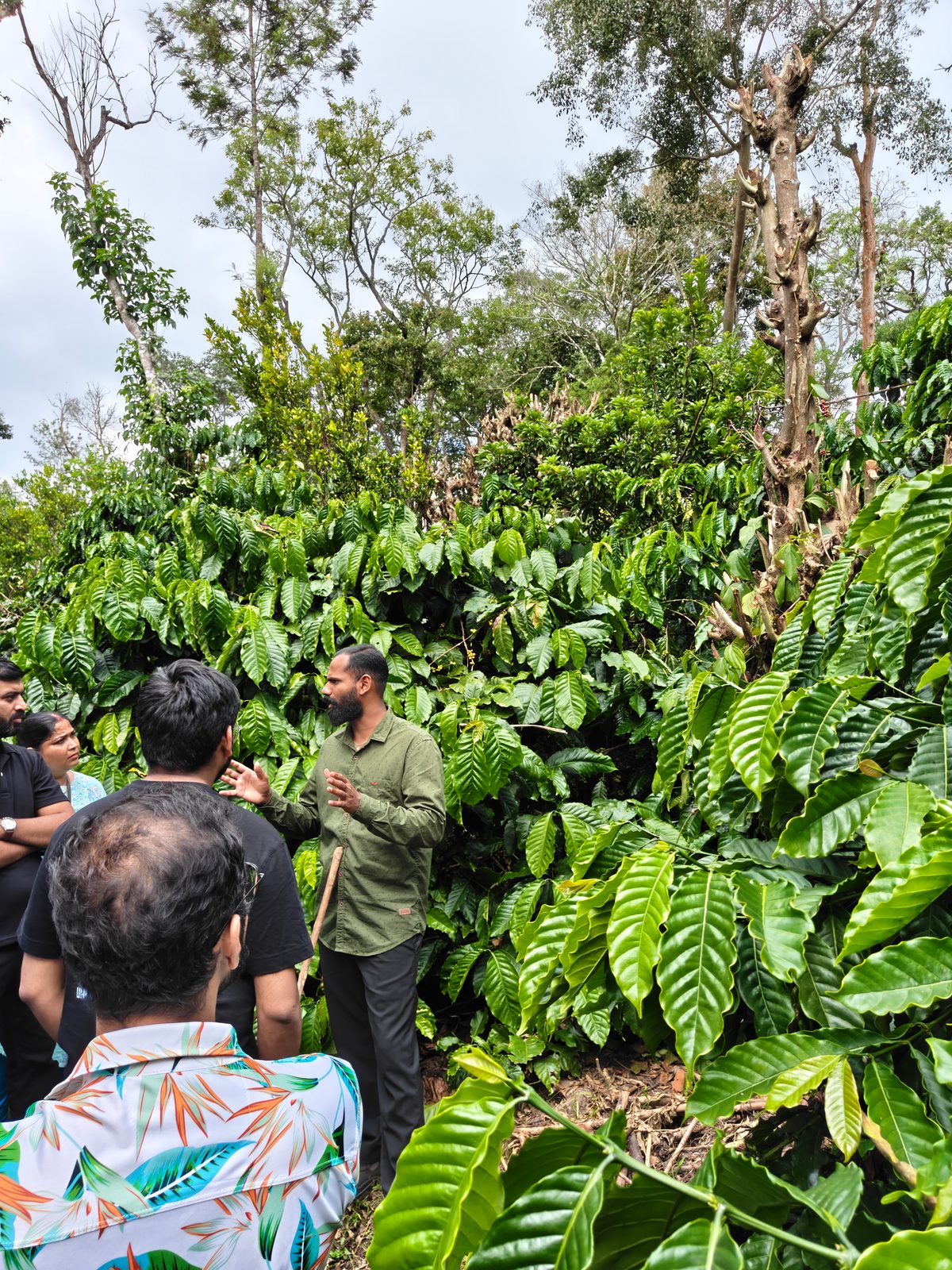
This is the heart of Coorg. Kodagu is the largest coffee- and pepper-producing district in India — it alone grows roughly a third of the country's coffee — and a guided plantation walk shows you how the beans grow in the shade of the forest, alongside pepper vines and cardamom. There's usually a fresh cup at the end.
🛕 Namdroling Monastery (Golden Temple)
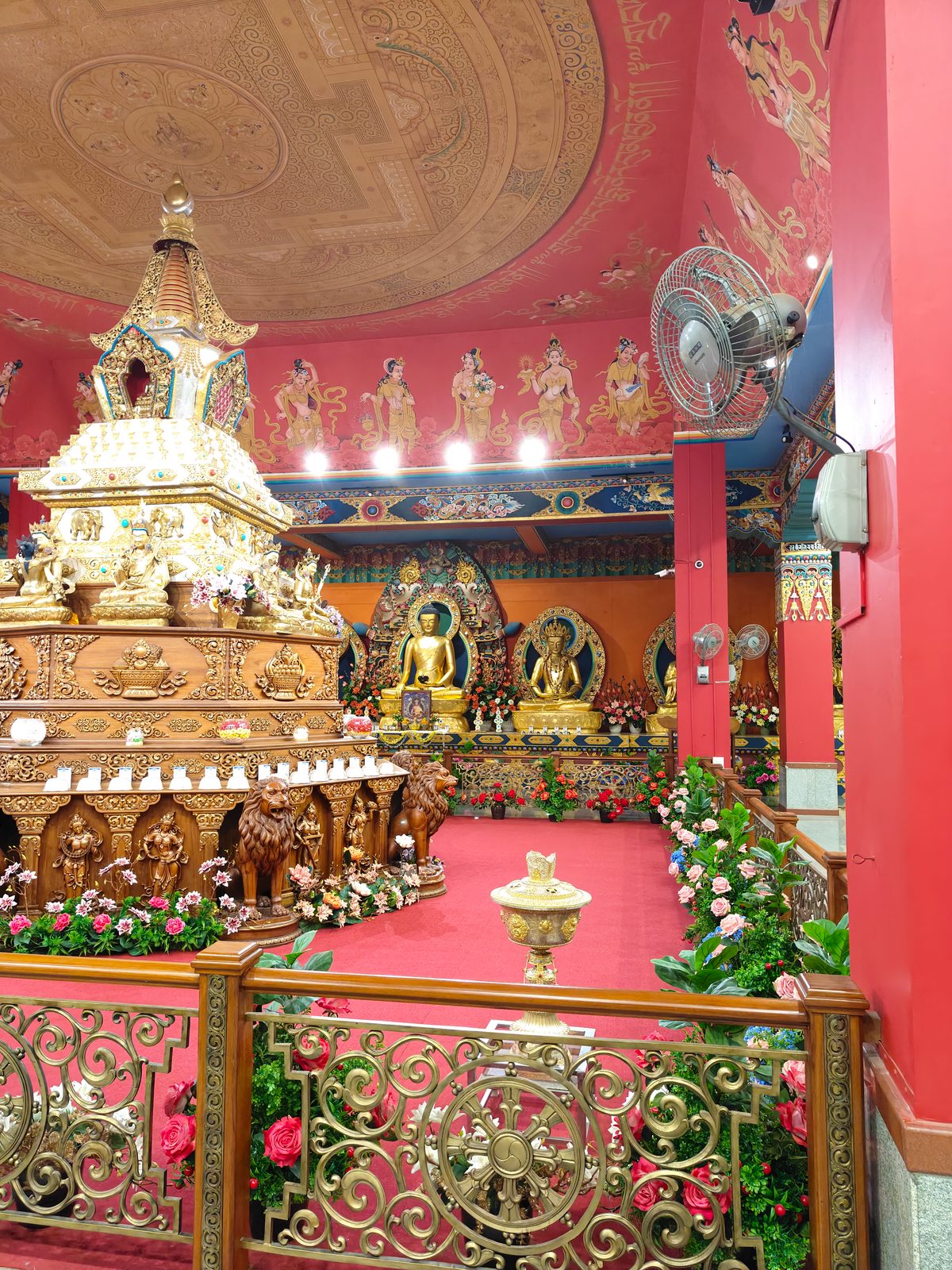
A short drive away at Bylakuppe is something unexpected in the Karnataka hills: one of the largest Tibetan settlements in India, and the Namdroling Monastery — the world's largest teaching centre of the Nyingma school of Tibetan Buddhism, home to a community of more than five thousand monks and nuns. It was founded in 1963 by Penor Rinpoche, who had escaped Tibet only a few years earlier. Its "Golden Temple," inaugurated in 1999, houses towering gilded statues of the Buddha, Guru Padmasambhava and Amitayus, under painted ceilings and murals. Step in quietly; it's a living monastery, not just a photo stop.
🎋 Tibetan Market & Nisargadhama
Browse the Tibetan flea market near the monastery for handicrafts and woollens, then wind down at Nisargadhama — a forested river-island reached by a hanging bridge, full of bamboo groves and spotted deer. Dinner and an overnight stay follow.
🌄 Day 2 – Misty Peaks, Falls & a Fort
⛰️ Mandalpatti Peak (Off-Road Jeep Ride)
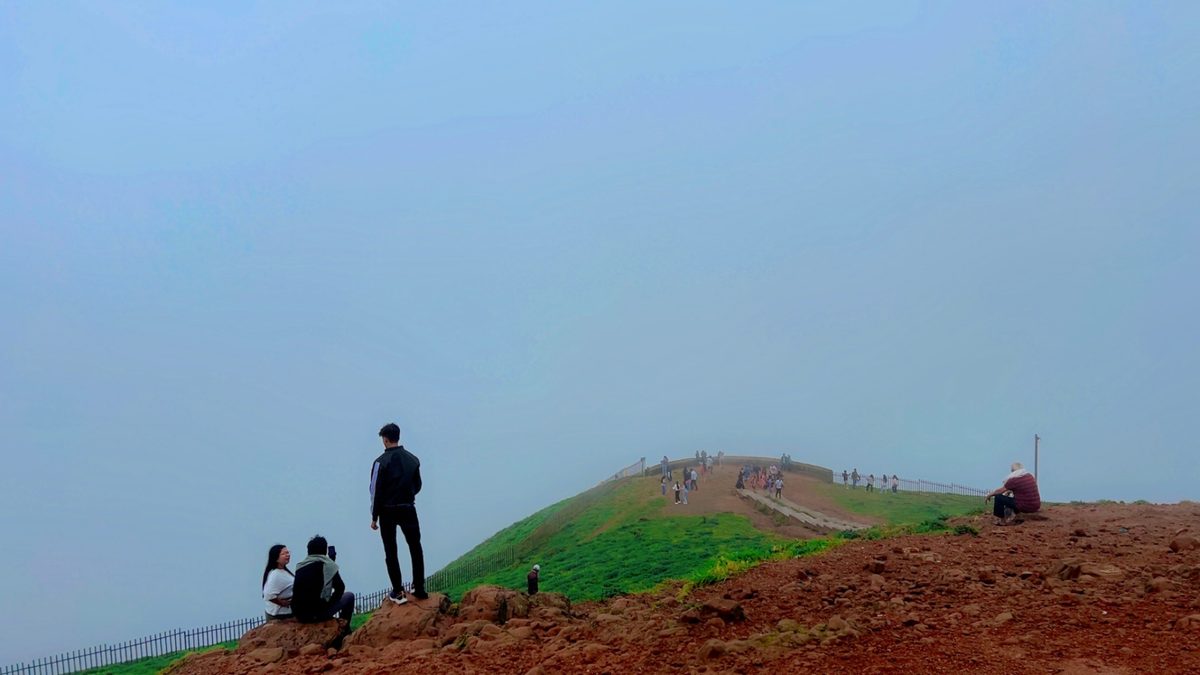
After an early breakfast and checkout, the second day begins with the trip's biggest thrill: a bumpy off-road jeep ride up to Mandalpatti Peak. At around 1,600 m, on the edge of the Pushpagiri range, the summit is a sea of rolling grassland that's usually wrapped in cloud — you stand in the mist with the hills falling away on every side. (If Mandalpatti is closed, Nishani Betta is the alternate.) The jeep is a local, self-sponsored add-on.
💧 Abbey Falls
Next, Abbey Falls — a waterfall set deep in coffee and spice estates near Madikeri, reached by a short walk and viewed from a little hanging bridge. It's at its thundering best just after the monsoon.
🏰 Madikeri Fort & Raja's Seat
The trip finishes in Madikeri, the hill-station capital. The Madikeri Fort was first built in 1681 by the Haleri king Mudduraja and later rebuilt in stone by Tipu Sultan. A short walk away is Raja's Seat — the "king's seat," a garden viewpoint where the Kodagu rulers once watched the sunset over the valley, and where you'll do the same before the drive home.
🌙 ~07:00 PM – Return to Bangalore
From Madikeri the bus turns for home in the evening, reaching Bangalore in the small hours — around 1:00–2:00 AM. Two full days of hills, and you're back in time for a Monday.
2-Day Trip Summary
| When | Activity |
|---|---|
| Fri 10:00 PM | Depart Bangalore, overnight journey |
| Day 1 morning | Hotel check-in, Dubare Elephant Camp |
| Day 1 midday | Coffee plantation tour |
| Day 1 afternoon | Golden Temple, Tibetan market, Nisargadhama |
| Day 1 evening | Dinner & overnight stay |
| Day 2 morning | Breakfast, Mandalpatti Peak jeep ride |
| Day 2 midday | Abbey Falls, Madikeri Fort |
| Day 2 evening | Raja's Seat sunset, start return |
| ~01:00–02:00 AM | Reach Bangalore |
💬 WhatsApp-Friendly Itinerary
2-Day Trip: Coorg from Bangalore
- 🌙 Fri 10 PM: depart, overnight to Coorg
- 🐘 Day 1: Dubare elephants + coffee plantation
- 🛕 Golden Temple + Tibetan market + Nisargadhama
- 🛏️ Dinner & overnight stay
- ⛰️ Day 2: Mandalpatti jeep ride (misty peak)
- 💧 Abbey Falls + Madikeri Fort
- 🌇 Raja's Seat sunset, then home
- 🏁 Back in Bangalore ~1–2 AM
The classic Coorg weekend — coffee, hills & misty peaks.
Know Before You Go
| Detail | What to Expect |
|---|---|
| Distance from Bangalore | Around 250 km; roughly 5–6 hours by road, done overnight on this trip |
| Mandalpatti jeep ride | Self-sponsored, around ₹550–600 per person; a bumpy off-road climb |
| Entry tickets | Dubare, Abbey Falls, Nisargadhama etc. charge small separate entries; not included |
| Best season | October–March for clear hills; just after the monsoon the falls are fullest (it rains heavily Jun–Sep) |
| Monastery etiquette | Dress modestly, keep quiet, and remove footwear inside the Golden Temple |
| What to carry | Light warm layer (Coorg is cool and misty), rain jacket in season, comfortable shoes, cash |
FAQs
1. How far is Coorg from Bangalore?
Around 250 km, roughly a 5–6 hour drive. This trip covers it overnight with a Friday 10 PM departure, so you arrive fresh for a full first day.
2. Why is Coorg called the "Scotland of India"?
For its misty green hills, cool climate, rolling estates and forested valleys, which reminded early visitors of the Scottish highlands. Coorg (Kodagu) is also India's largest coffee- and pepper-growing district, so the hills are covered in plantations.
3. What is the best time to visit Coorg?
October to March for pleasant weather and clear views. If you want the waterfalls in full flow, go just after the monsoon (September–October); the monsoon itself (June–September) is lush but very wet, and peaks like Mandalpatti can be socked in.
4. Is the Mandalpatti jeep ride worth it?
Yes — it's a highlight. The off-road jeep climb is bumpy and fun, and the misty grassland summit is one of Coorg's best views. It's a self-sponsored add-on of about ₹550–600 per person, and access depends on the weather and local conditions.
5. What is the Golden Temple at Coorg?
It's the Namdroling Monastery at Bylakuppe — the world's largest teaching centre of the Nyingma school of Tibetan Buddhism, part of one of the largest Tibetan settlements in India. Its main temple, with towering gilded Buddha statues, is known as the "Golden Temple."
6. Is this trip suitable for families?
Yes. Apart from the bumpy (optional) Mandalpatti jeep ride and a short walk to Abbey Falls, it's an easy itinerary. The elephant camp, monastery and Nisargadhama are all family favourites — just pack a warm layer for the cool hill evenings.
Did You Know?
Fascinating facts about Coorg
☕ Coffee Country & Culture
India's Coffee Capital
Kodagu is the largest coffee- and pepper-producing district in India, growing roughly a third of the entire country's coffee in the shade of its forests.
A Warrior People
The Kodavas, Coorg's original inhabitants, are a distinct martial community with their own language and traditions — historically a warrior people who carried arms.
The Birthplace of the Kaveri
The sacred river Kaveri rises in Coorg at Talakaveri, where a temple to Lord Brahma stands — one of only a handful dedicated to Brahma anywhere.
🛕 Hills, Kings & Monks
A Piece of Tibet in Karnataka
Bylakuppe, near Coorg, is one of the largest Tibetan settlements in India, and its Namdroling Monastery is the world's largest Nyingma teaching centre, home to over 5,000 monks and nuns.
A Fort Two Rulers Built
Madikeri Fort was first raised in mud by the Haleri king Mudduraja in 1681, then rebuilt in stone by Tipu Sultan a century later — two dynasties in one wall.
The King's Sunset Seat
Raja's Seat — literally "the king's seat" — is the garden viewpoint where the rulers of Kodagu once came to watch the sun set over the hills.
Travel Tips
- Pack a warm layer. Coorg is a hill station — mornings, misty peaks and evenings get genuinely cool, even in summer.
- Sleep on the overnight bus. The Friday-night departure is what gives you two full days; rest on the road so you're fresh for Dubare.
- Carry cash. The Mandalpatti jeep, entry tickets, plantation stalls and the Tibetan market are largely cash-based.
- Respect the monastery. Dress modestly, stay quiet, and remove footwear inside the Golden Temple — it's an active place of worship.
- Go post-monsoon for the falls. September–October gives you full waterfalls and green hills without the heaviest rain.
- Wear grippy shoes. Plantation trails, the Abbey Falls walk and misty peaks can all be slippery.
- Buy the coffee. Freshly roasted Coorg coffee (and pepper, honey and homemade wine) makes the best souvenir.
Ready to Travel?
Join BOZ Travel's 2-day group trip to Coorg. Skip the long overnight drive and the planning — travel with a fun group, stay in a comfortable hotel, and let the trip captain handle the logistics while you soak up the coffee hills.
Our trips include AC transport, hotel accommodation, breakfasts and an experienced trip captain, with a well-paced itinerary that makes the most of a Coorg weekend.
References
- Kodagu district - Wikipedia - Coorg's coffee, the Kodava people, the Kaveri's source and the "Scotland of India" name
- Namdroling Monastery - Wikipedia - The Golden Temple, its founding by Penor Rinpoche and the Nyingma community at Bylakuppe
- Madikeri - Wikipedia - Madikeri Fort, Raja's Seat, the Haleri dynasty and the hill-station capital